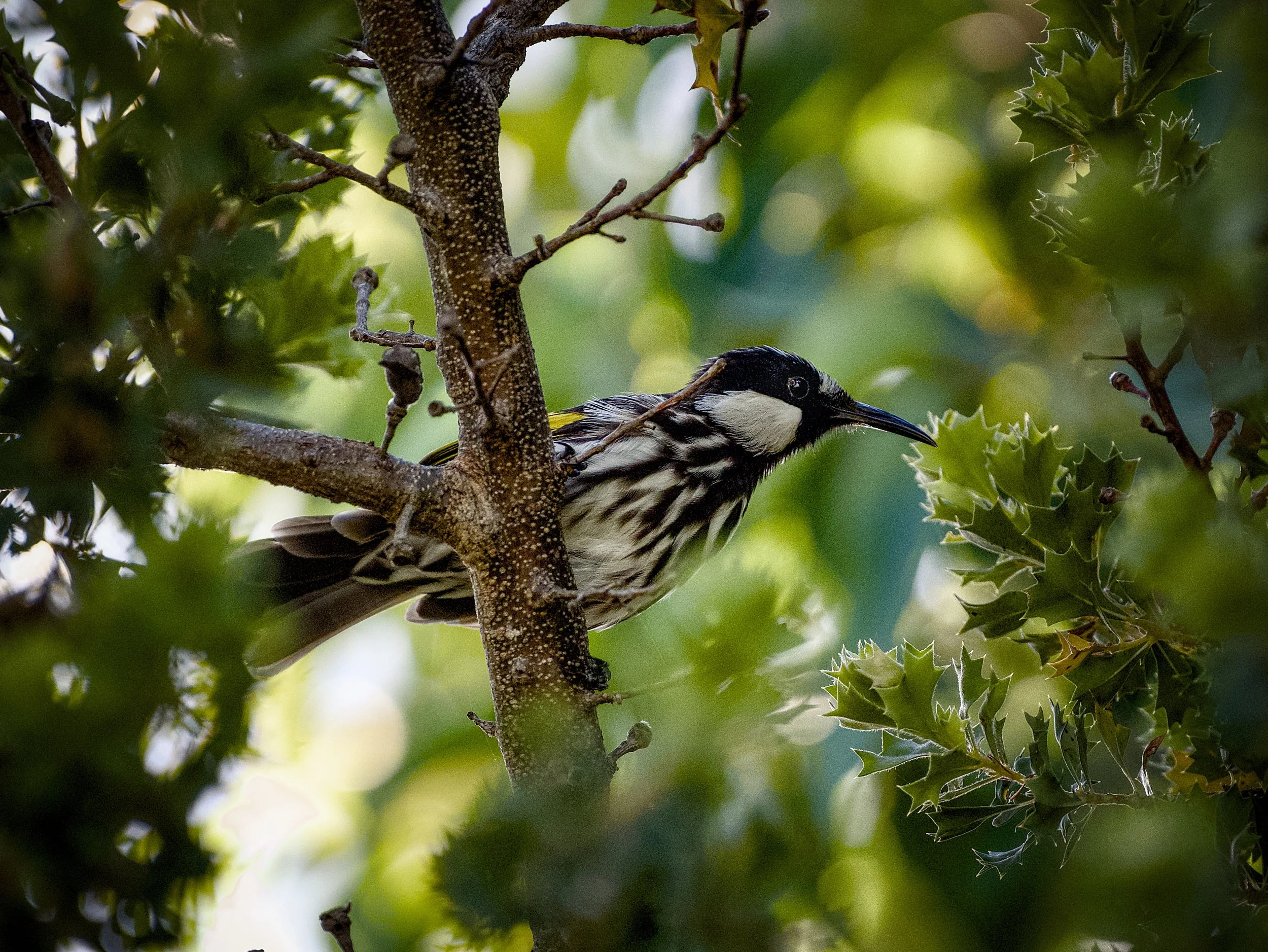

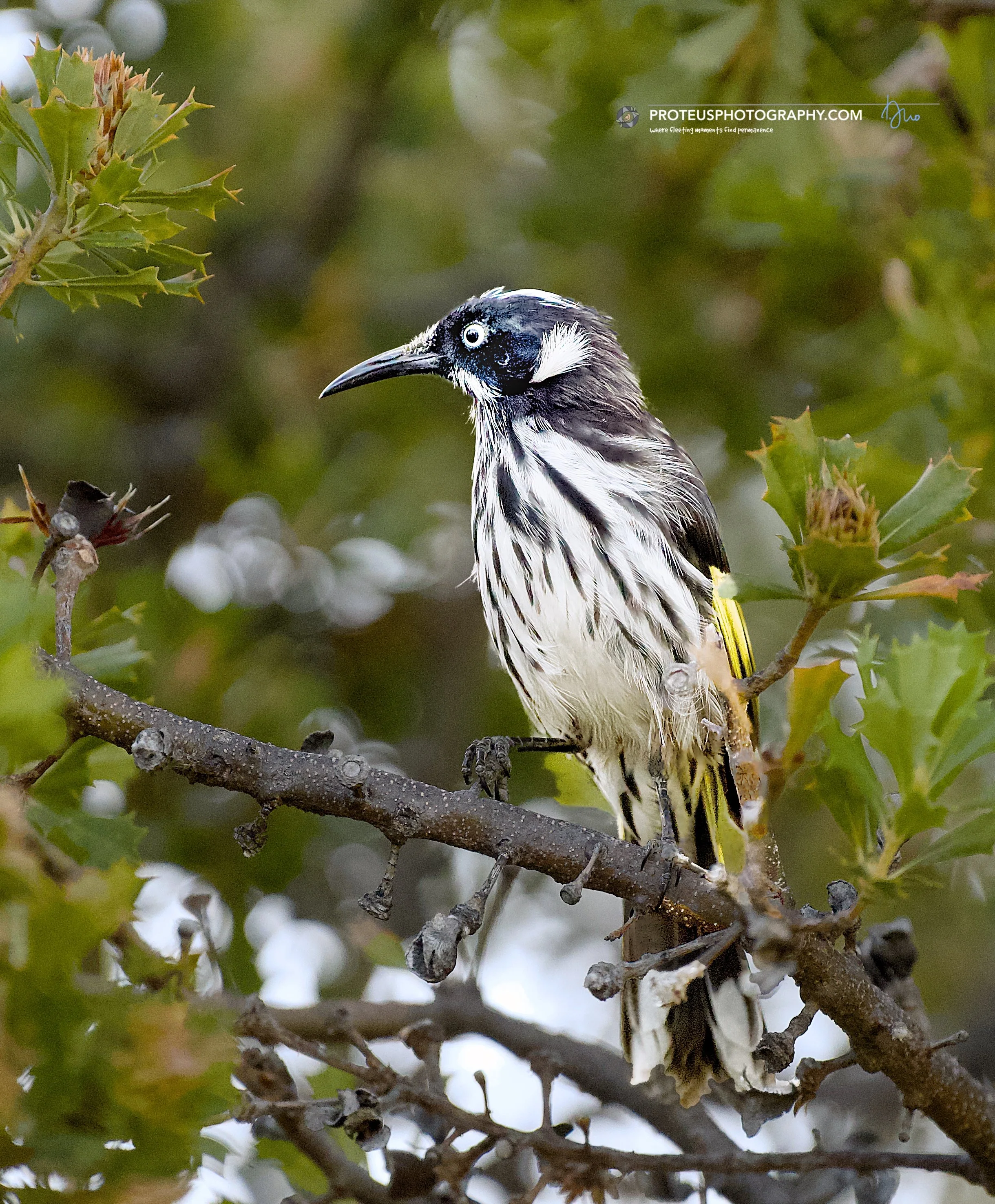
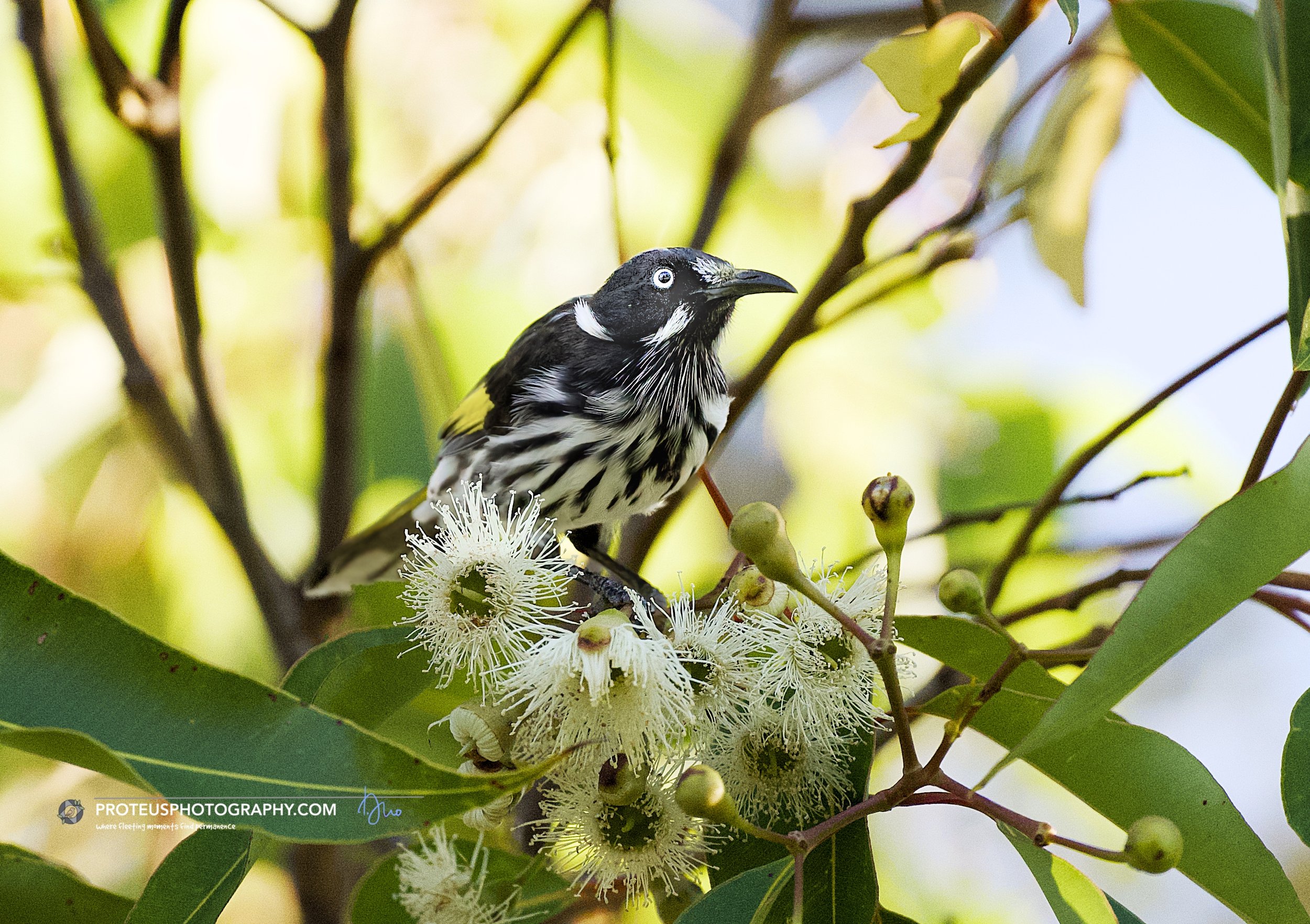
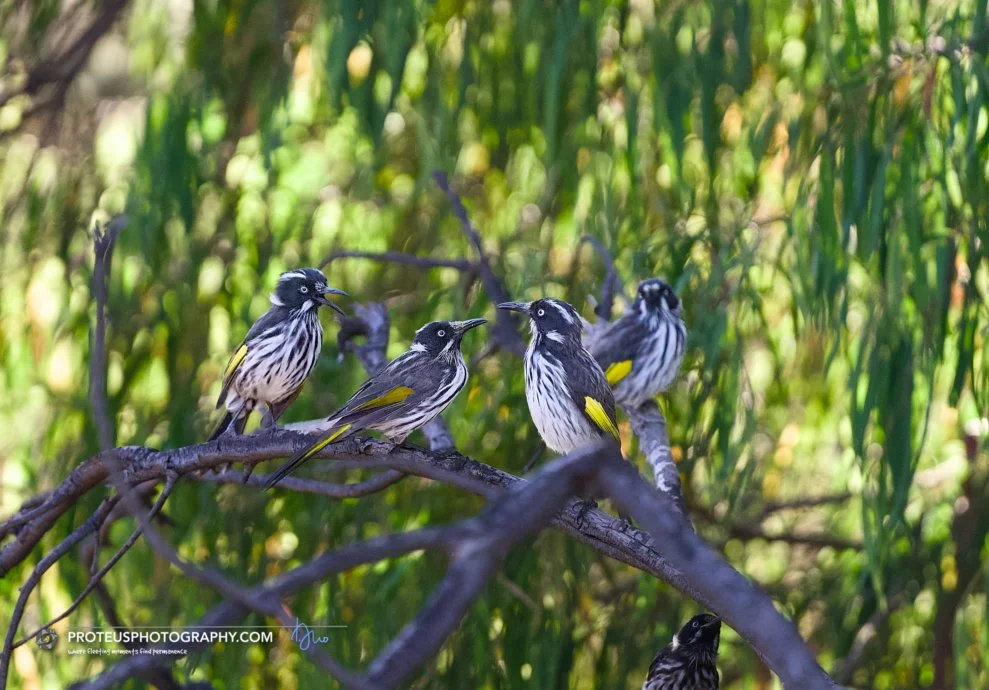
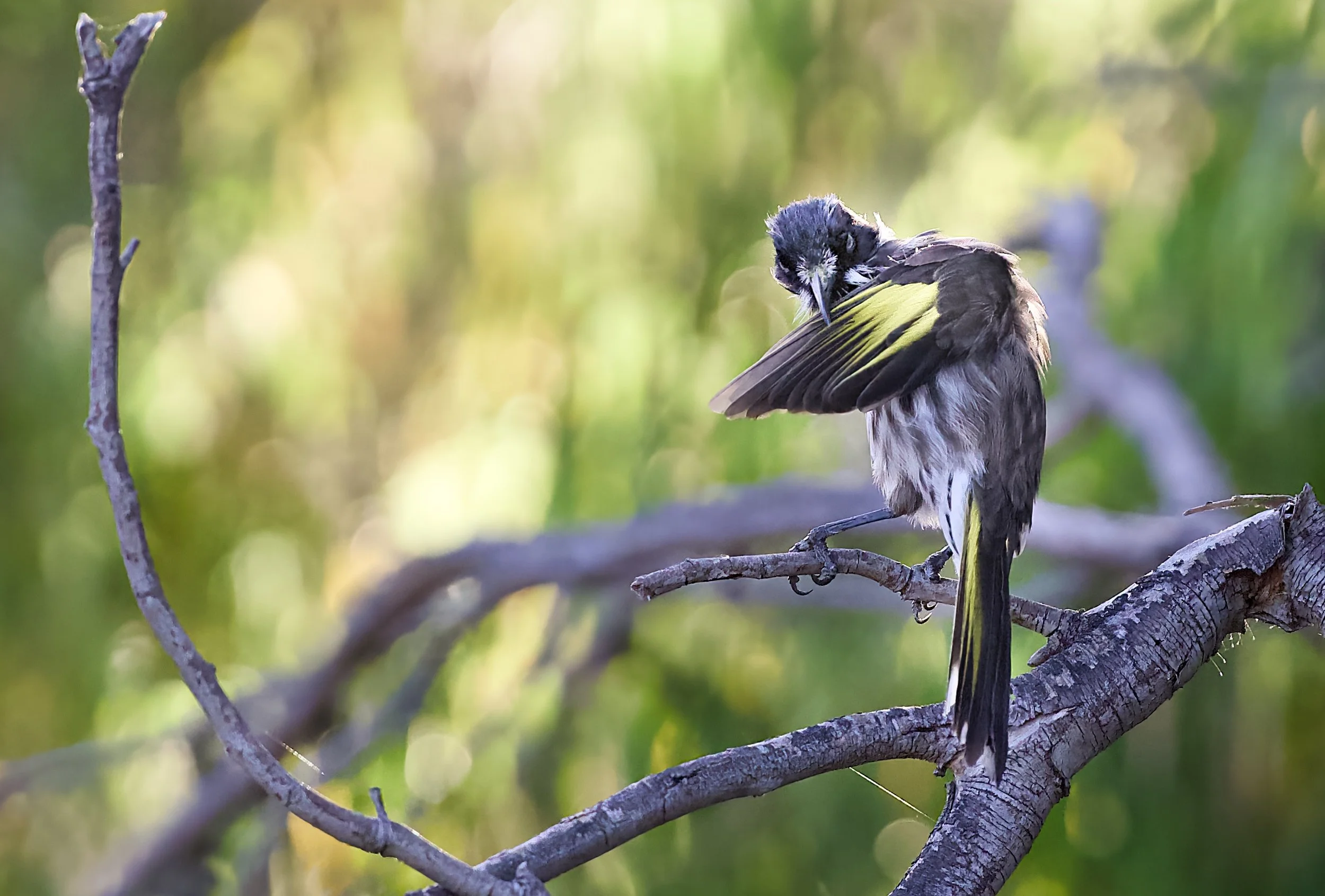
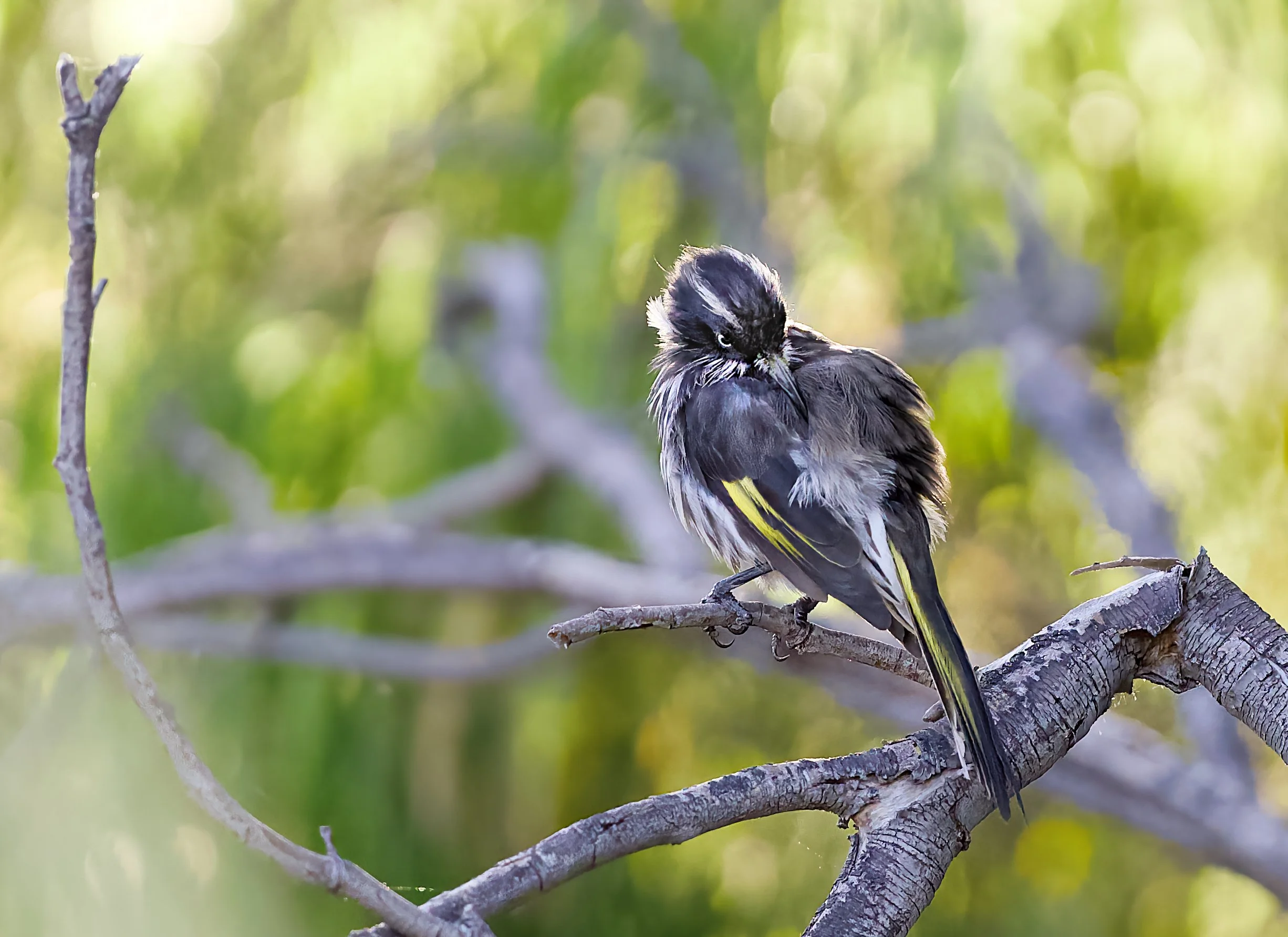
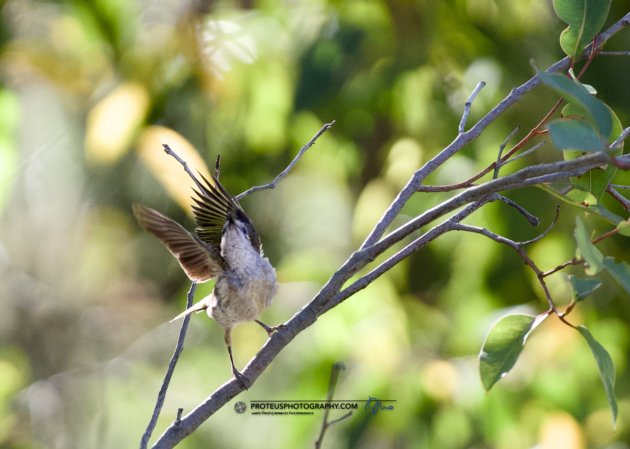
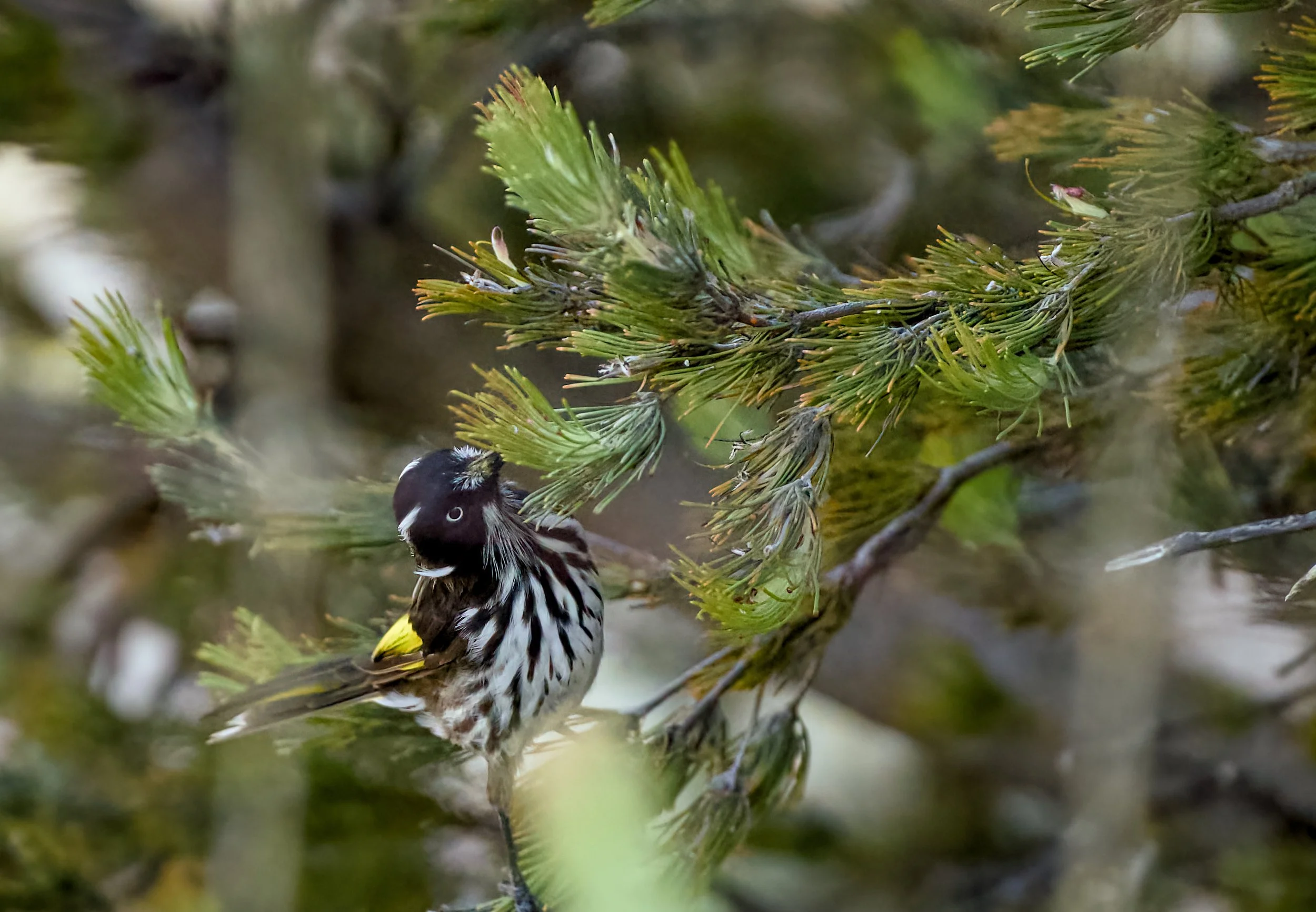
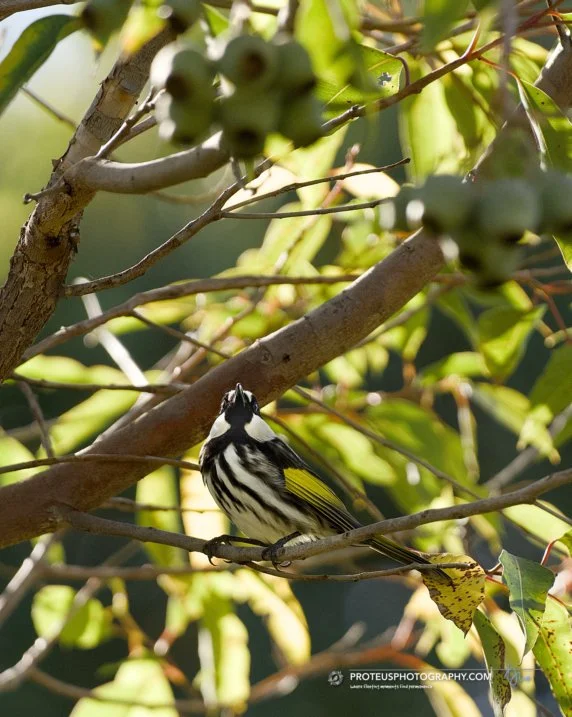
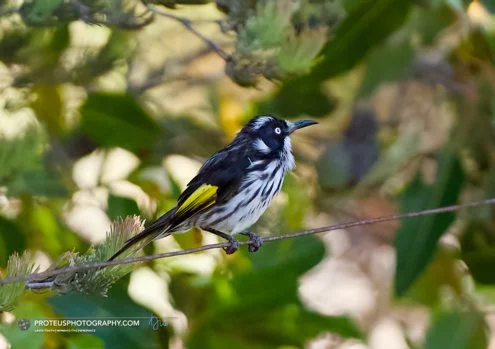
New Holland Honeyeater (Phylidonyris novaehollandiae): 50% feathers; 50% pure, unadulterated sugar rush
it’s just the caffeine-level focus needed to visit 3,000 flowers before lunch
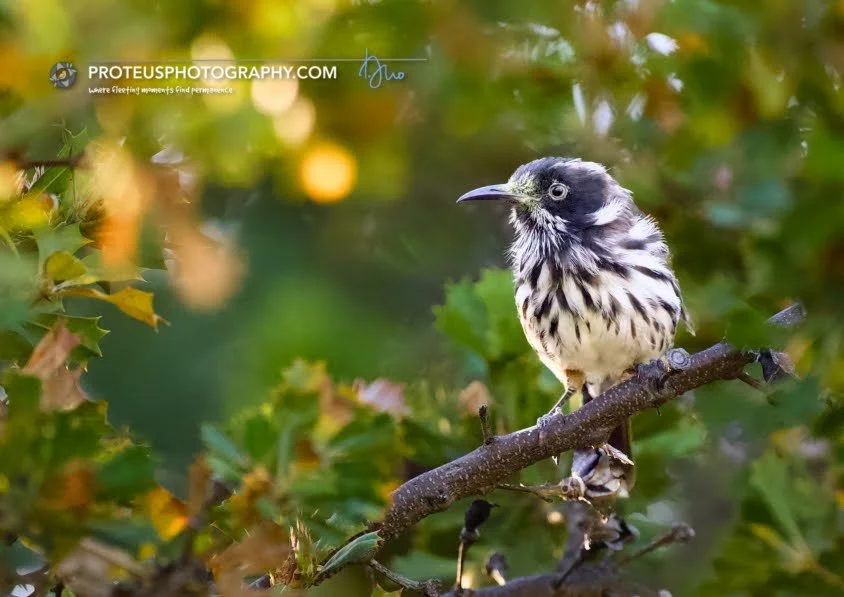
Broadcasting the neighborhood gossip at 5,000 Hertz!.
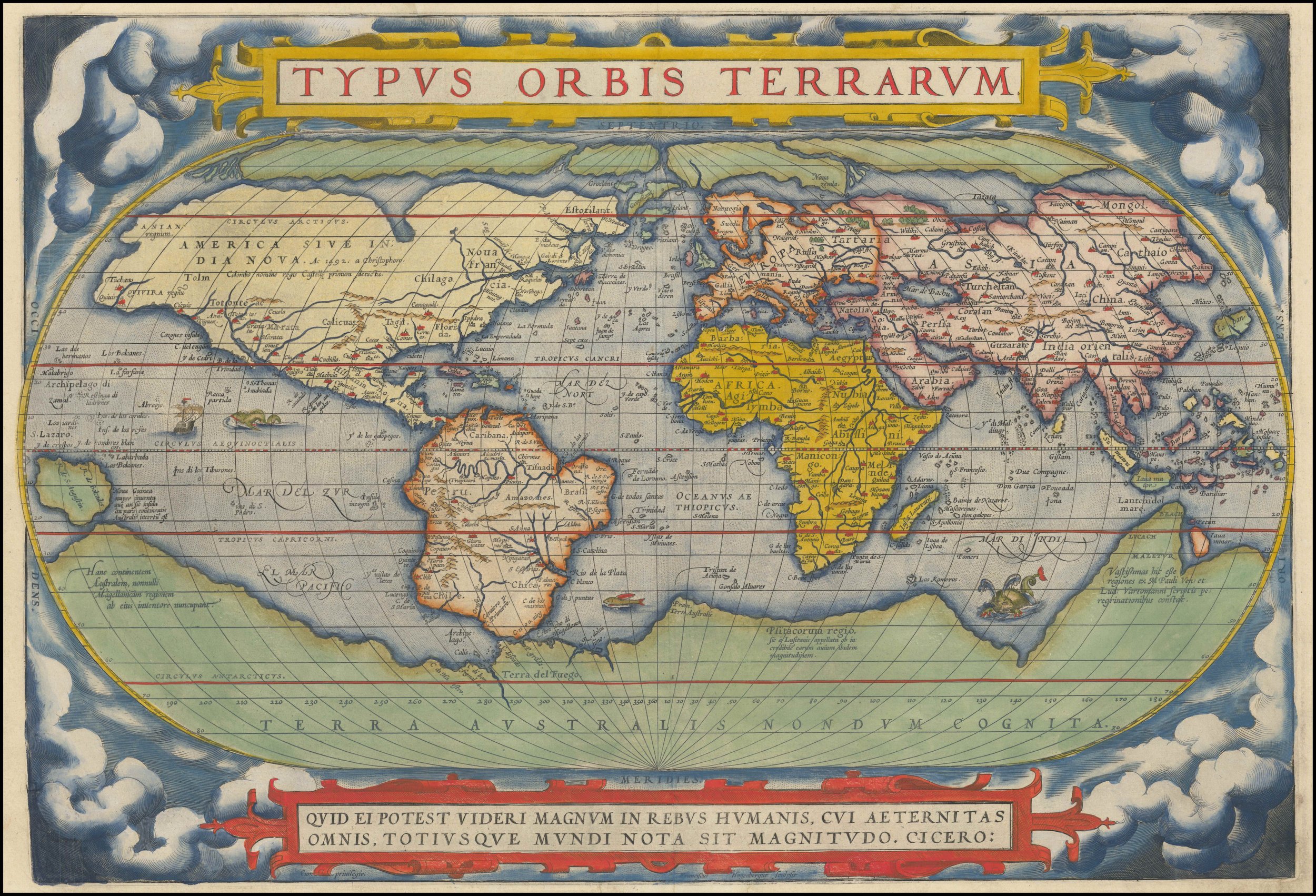
The name "New Holland" honeyeater comes from the historical European name for Australia. Because this bird was one of the very first species collected and described by early colonial naturalists (around 1790), it carries the old label of the Australian continent
The name Nova Hollandia (Latin) or Nieuw-Holland (Dutch) was first applied to the continent by the Dutch seafarer Abel Tasman in 1644. Then, the English navigator Matthew Flinders was the first to circumnavigate the continent in 1803, proving it was one single landmass. He argued that it made no sense to have two names (New Holland and New South Wales) for one continent. He championed the name "Australia," but the British Admiralty didn't officially adopt it until 1824.
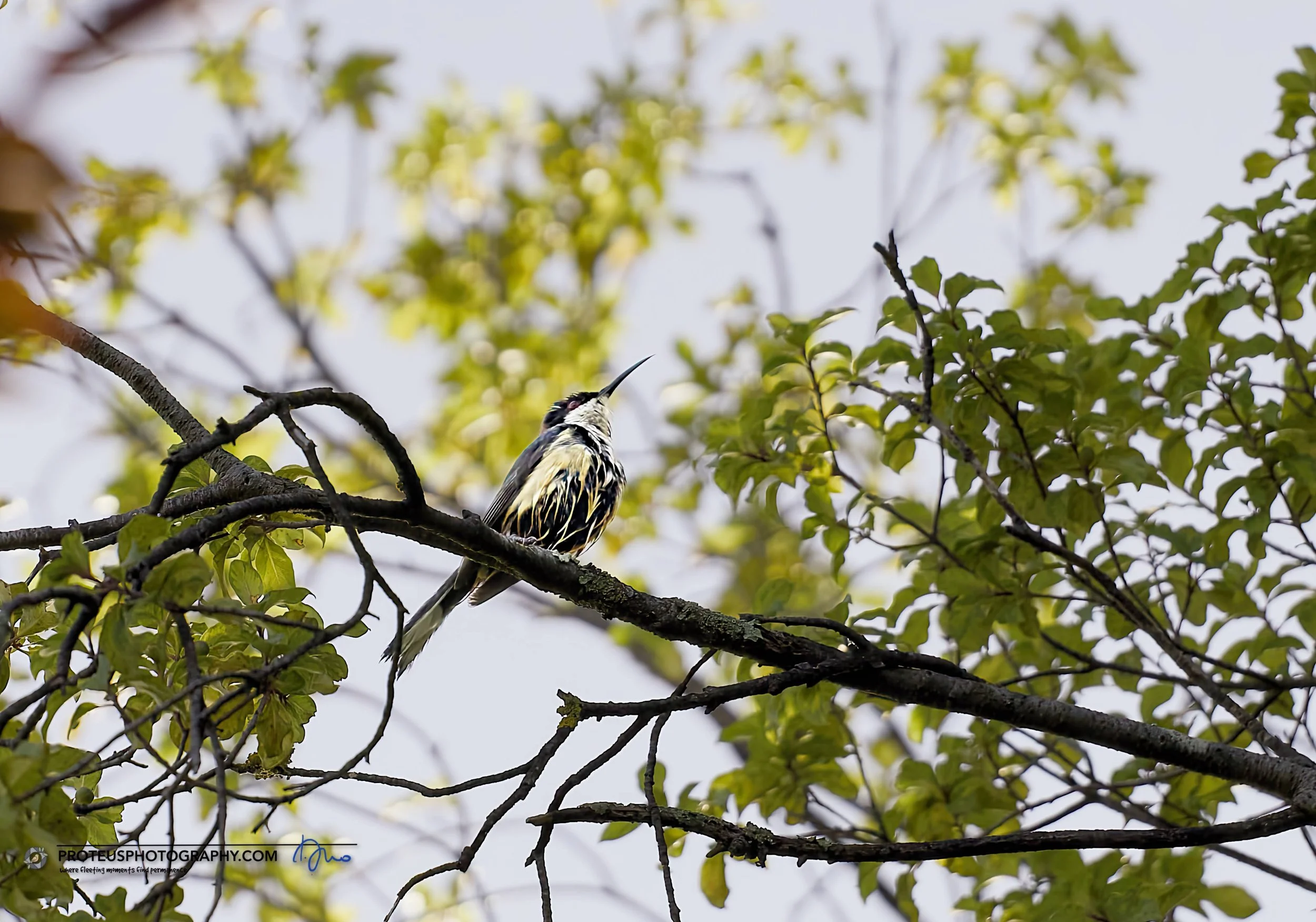
.. the spinebill is nature’s hovering bendy straw—dressed in a tuxedo, but never stopping for a table.
eastern spinebill (acanthorhynchus tenuirostris)
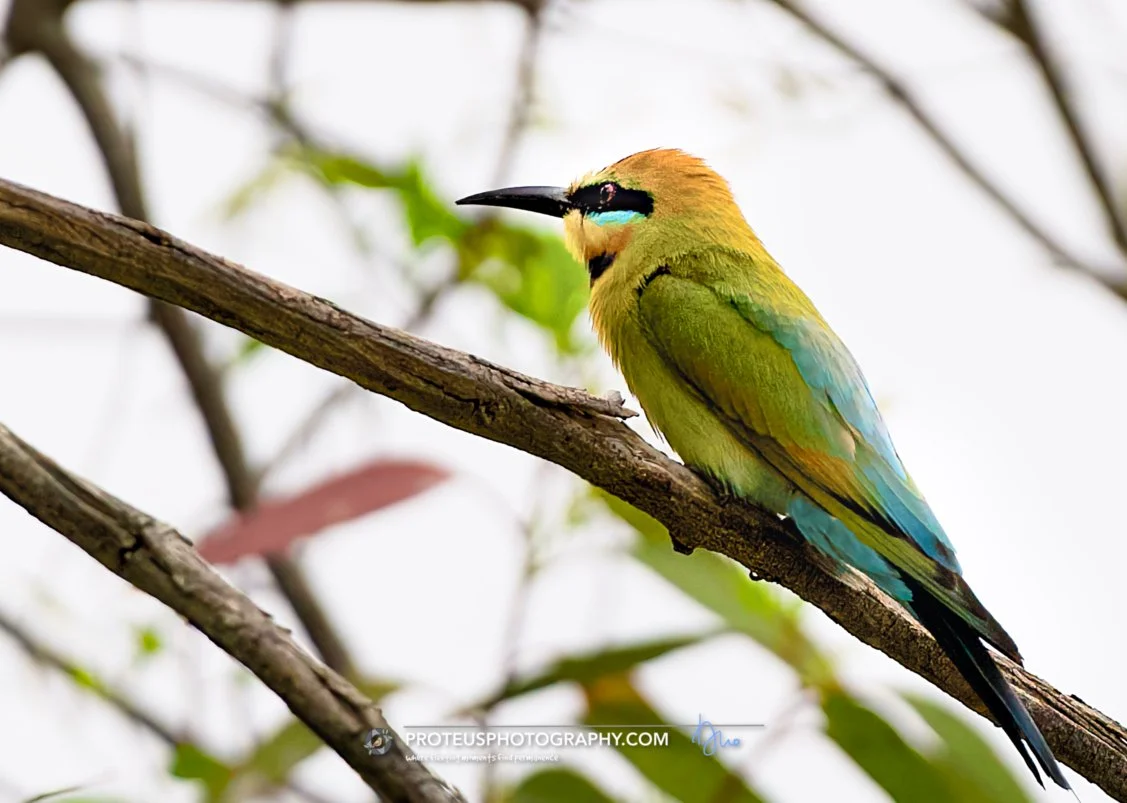
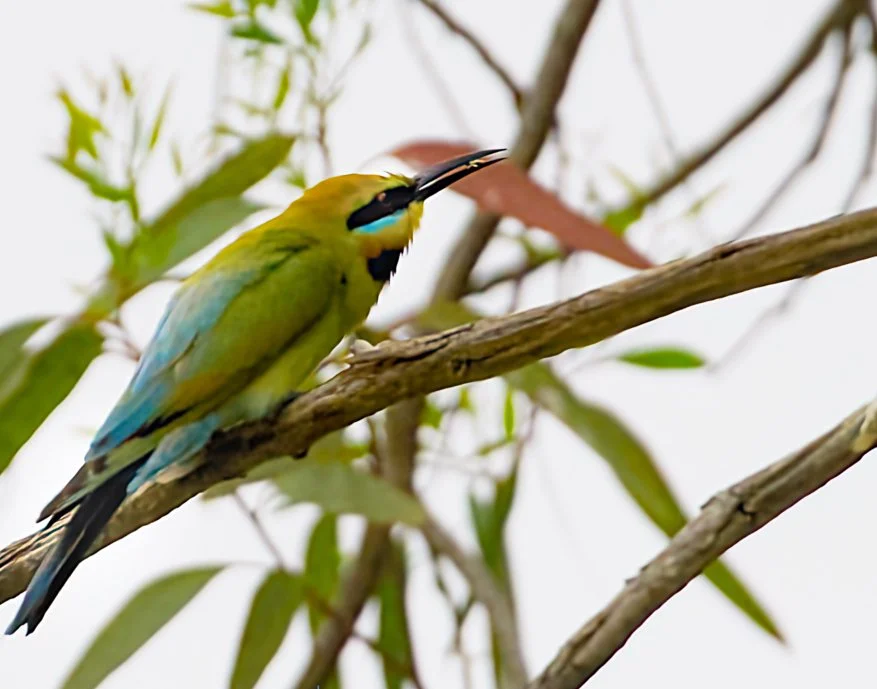
… don't let the pretty colours fool you; this is a heat-seeking missile designed for wasps. If it buzzes, it's brunch. Its also the only member of the bee-eater family found in Australia.
rainbow bee-eater (merops ornatus)
.. the brown honeyeater (lichmera indistincta) meaning 'indistinct', which is the ultimate irony …
… as while it might look like a flying shadow, it sings with the confidence of an opera star who knows they own the stage

… also the only honeyeater to have crossed the bio-geographical Wallace Line, but not found in Victoria or Tasmania