The Mutable Eye: From Wild Elements to Manufactured Narratives
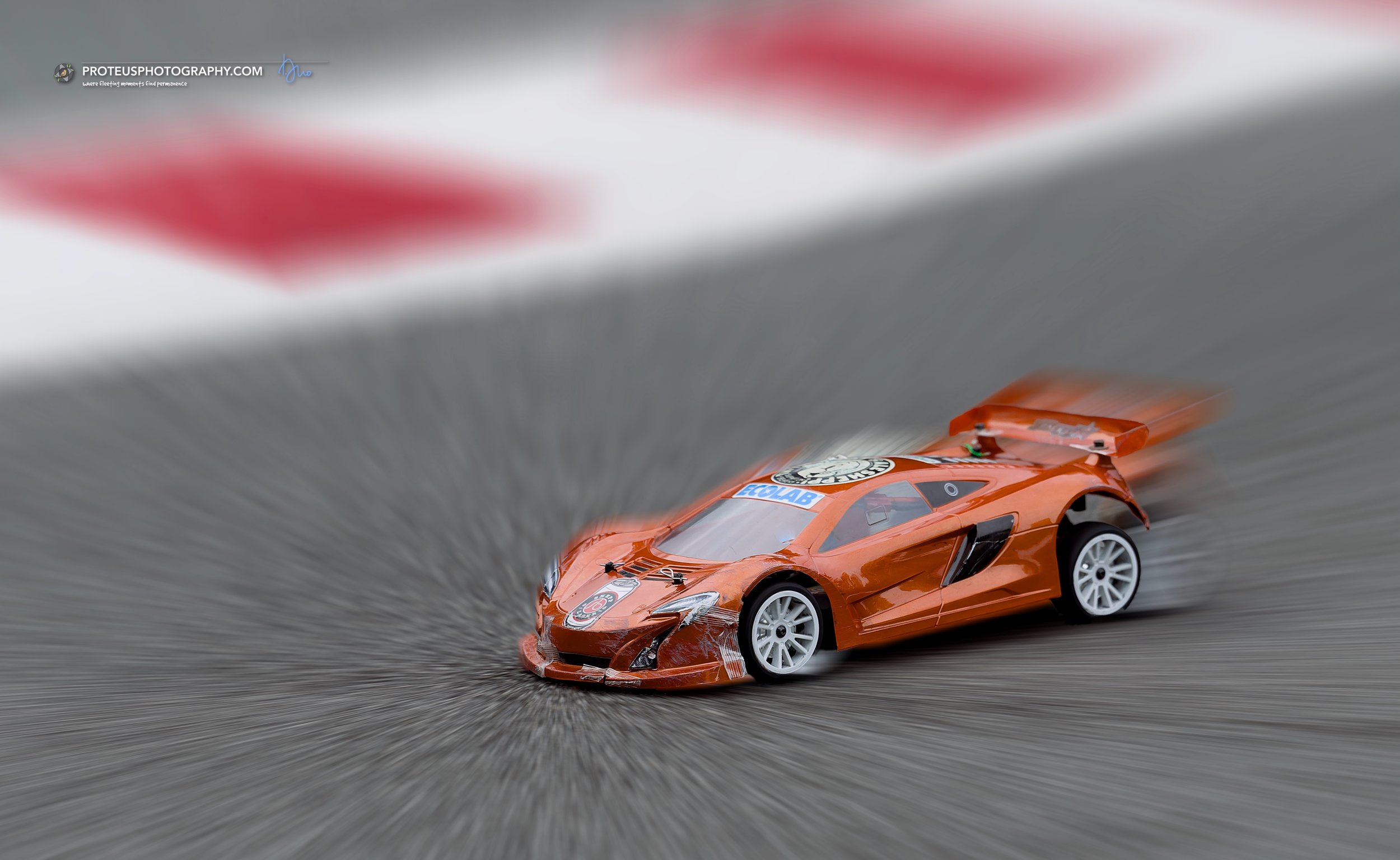
For years, the core philosophy driving my work at Proteus Photography has been centred on a singular, relentless pursuit: navigating the fluid, unpredictable currents of the natural world to find the symmetry hidden within chaos. It is a world where success is measured in milliseconds—the sudden, sharp turn of a native raptor, or the brief pocket of space occupied between a fleeing flock of cockatoos.
But what happens when the lens turns away from the wild, unscripted elements of nature and fixes its gaze upon something entirely engineered, static, and synthetic?
Today, the introduction of my new Plastic Model gallery represents a deliberate, calculated evolution. At first glance, transitioning from wildlife and macro nature photography to injection-molded polystyrene structures seems like a radical departure. In reality, it is a deeper exploration of the same fundamental curiosity: how we use optical fidelity to reveal structure, soul, and complexity where it is least expected.
To do this, I am framing this exploration under a new genre: Micro-Scale Realism & Manufactured Narratives.
1. The Paradox of Permanence
Our long-standing mantra, “when fleeting moments, find permanence™,” takes on an entirely inverted meaning within this new domain. In the wild, the photographer’s challenge is to freeze time—extracting a permanent memory from an inherently ephemeral, living event.
With plastic scale modeling, the paradox completely flips: the subject is already frozen, inorganic, and permanent. The artistic imperative is no longer to freeze life, but to breathe life into the lifeless.
Through highly deliberate macro-lighting, hyper-focused depth of field, and cinematic framing, the camera introduces a deceptive fluidity. I am no longer documenting a physical reality; I am constructing a psychological one. The lens tricks the eye into sensing weight, atmospheric depth, and historical scale where there is only a miniature desktop replica.
2. Computational Aesthetics in Miniature
Every discipline has an underlying mathematical rhythm. In nature, it manifests as the chaotic perfection of fractal branching or the precise spiral of a seed pod. In scale modelling, that rhythm belongs to engineering geometry and strict scale ratios—whether 1:35, 1:48, or 1:72.
By applying high-resolution macro optics to these models, the camera exposes a magnificent, calculated interplay of textures. The lens reads the deliberate "chaos" introduced by human hands: minute paint weathering, microscopic decals, and razor-thin engineered panel lines. The resulting images transform synthetic objects into sweeping, complex landscapes, proving that computational beauty is just as vibrant in human craftsmanship as it is in the biological wilderness.
3. An Evolution of Macro-Storytelling
Macro photography has always been a passport to hidden worlds, allowing me to scrutinise the complex web of a spider or the fine details of a native flower. Bringing that identical high-fidelity lens to miniature replicas allows us to document narrative craftsmanship.
Every micro-scratch on a fuselage, every speck of simulated dust, and every slight variation in tone becomes an intentional focal point of drama. The lens isolates these infinitesimal accents, elevating the subject from a desktop hobby to a piece of enduring, cinematic art. It celebrates the universal human impulse to replicate the vast, complex machinery of our world on a scale we can touch.
The Verdict
The Plastic Model genre is a testament to the idea that the mutable nature of photography is not confined by the boundaries of its subject. Whether capturing a wild bird interacting with its environment or a beautifully weathered scale replica catching a sliver of morning light, the camera remains the ultimate tool for finding hidden symmetry, narrative depth, and soul.